Specialist termite inspections, treatments and management systems for Queensland homes and businesses. Carried out to Australian Standard AS3660.2-2017 by your Termidor Accredited Applicator based in Shailer Park & Spr.
If you have found or suspect active termites, do not spray them or disturb them in any way. Disturbing an active colony can cause them to retreat deeper into the structure, making treatment significantly harder. Call us first and we will advise you on what to do before we attend.
No termite management system installed? We come out, properly assess your site, and give you a quote for a recommendation that actually fits your home. No cost, no obligation.
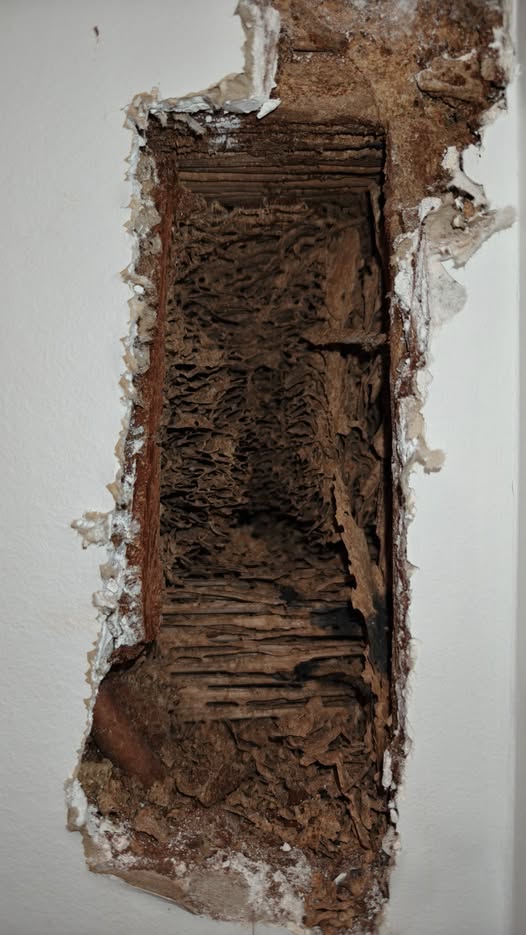
Add your inspection photo here
Termites cause more damage to Australian homes than fire, floods and storms combined, and most home insurance policies do not cover termite damage. In South-East Queensland, the subtropical climate and widespread bushland create near-ideal conditions for termite activity year-round.
The areas around Springwood, Shailer Park and Daisy Hill Forest are particularly active. Properties backing onto bushland, near creek lines or with older construction are at elevated risk, but all Queensland homes should be inspected annually as a minimum.
A thorough termite inspection covers all accessible areas of the structure and site. Subfloor, roof void, interior, yard, fences and outbuildings. We have thermal imaging cameras, moisture meters and Termatrac movement detection equipment to use on suspect areas to help assess for termite activity.
A comprehensive digital Termite Inspection Report documenting findings, risk factors, areas of concerns, and recommendations.
If termite activity is found, we provide a separate management quote.
A continuous chemically treated zone is created in the soil around the perimeter of the structure of your property using Termidor HE. Termidor is non-repellent meaning termites cannot detect or avoid it. They pass through the treated zone, pick up the active ingredient and carry it back through the colony via the Transfer Effect, eliminating it at the source.
Termidor HE is Australia's most trusted termiticide, used on over one million homes worldwide. It is APVMA registered and safe for people and pets once the treated zone has dried.
As a Termidor Accredited Applicator, Active Termite Solutions is qualified and authorised to install Termidor HE management systems.
Trelona ATBS in-ground bait stations are installed around the perimeter of your property at regular intervals not exceeding 3 metres if possible. Stations are inspected every 3-6 months, and when termite activity is detected, the stations are monitored more frequently for bait consumption and replacement. Termites feed on it and carry the active ingredient back through the colony, eliminating it from the source. It is an ideal option where a chemically treated zone is not suitable for the full site, or is preferred by the client.
Trelona ATBS uses Novaluron, an insect growth regulator that disrupts the moulting process. It is slow-acting by design, termites transfer it through the colony before effects are noticed, achieving full colony elimination.
It has a low environmental footprint and is APVMA registered for residential use in Australia.
When active termites are found during an inspection, treatment of the infestation is carried out before the management system is installed. The goal is to begin colony elimination as quickly as possible. Depending on the situation, treatment may use Termidor HE Aqueous applied to active areas, Termidor Foam injected directly into active workings, or a combination of both.
Active termite treatment timeframes vary significantly depending on colony size, species, and the extent of activity. Some situations resolve in weeks and others can take months. We provide a realistic estimate on the day and keep you informed throughout the process.
Do not disturb, spray or disturb active termites before we attend as this can cause the colony to move and make treatment significantly more difficult and prolonged.
All accessible internal areas including skirting boards, door and window frames. All living areas, bedrooms, bathrooms, kitchen and laundry.
Where accessible, the full subfloor area is inspected including piers, bearer and joist timbers, and any earth-to-timber contact points that represent elevated risk.
Roof voids are inspected for signs of termite activity to accesible framing and trusses. The roof void must be de-energized in order to be inspected safely by our team.
The external perimeter of the structure is inspected, including weep holes, slab edges, garden beds, retaining walls and timber in contact with the ground. We look for signs of activity and conducive conditions.
Trees, tree stumps and timber fencing within the property boundaries and within reasonable distance are inspected. These are common harbourage sites for termite colonies in South-East Queensland.
Thermal imaging, moisture meters and Termatrac equipment can be used throughout the inspection on suspect areas to assess for possible activity that cannot be identified through visual inspection alone.
Based in Springwood and Shailer Park, we work across South-East Queensland every day. The proximity of properties to Daisy Hill Forest, Kimberley Forest Park and the creek lines running through the Logan area means termite pressure is genuinely elevated in this region.
The most common species we encounter across SEQ include Coptotermes (the most destructive), Schedorhinotermes, Nasutitermes and Microcerotermes. Each species behaves differently and understanding this means we can recommend the right management approach for each property.
Servicing all suburbs across South-East Queensland. Not listed? Give us a call.
From first contact through to an installed management system, here is exactly how the process works.
We conduct a Termite Inspection to Australian Standard AS3660.2-2017 using thermal imaging, moisture meters and Termatrac on suspect areas. Every accessible area of the structure and site will be inspected.
You receive a comprehensive digital report with all findings, risk factors and recommendations. If a management system is recommended, a separate quote is provided.
On acceptance of the quote, we issue a formal Termite Management Action Plan detailing all works to be carried out. Active termites are treated before any management system is installed.
Annual inspections and service reminders keep your management system current. On-going termite inspections are crucial so be sure to reply to our emails or call us when you recieve a text.
A detailed written report covering all findings from the inspection including species identification where possible, risk assessment, areas affected, construction type, conducive conditions and specific recommendations. Issued after every inspection.
The formal agreement issued before any treatment or management system installation begins. Covers the scope of works, products to be used, APVMA approved products, application methods, and limitations of the proposed system.
Issued after installation of a termite management system. Documents what was installed, where, the lineal metres treated, and any site-specific limitations noted on the day. This is your ongoing record of the system.
Every Queensland home should be inspected at least annually regardless of whether you have visible signs of termites. If you have not had an inspection in the past 12 months, it is overdue. Common signs include mud tubes along foundations, hollow or soft-sounding timber, tight-fitting doors or windows, and blistered paintwork. Termites are often active with no visible signs at all.
Most standard residential inspections take between 60 and 120 minutes depending on the size and construction type of the property. Larger homes, properties with subfloors, or those with extensive gardens may take longer. Ask us how long your inspection might take when you call us.
The goal of a chemically treated zone is to create a continuous treated barrier in the soil around your property using Termidor HE. It is installed once and provides protection for up to 8 years. A Trelona bait system uses in-ground stations monitored regularly, when activity is detected, bait consumption is monitored and replaced as needed until activity stops. Both are effective; the right choice depends on your property type, construction, and specific site conditions.
Yes. A combined system using both Termidor HE and Trelona ATBS provides the most comprehensive approach. The chemical treated zone covers the structure while the bait stations monitor the perimeter and eliminate any approaching colonies. It is the option we most commonly recommend for higher-risk properties.
In most cases, no. Standard home and contents insurance policies in Australia do not usually cover termite damage. This is one of the key reasons why proactive inspections and management systems are so important, as the cost of an annual inspection can be a fraction of the average cost of termite damage repairs.
As soon as possible. If a building and pest inspection was carried out at the time of purchase, a termite inspection should still be completed annually from that point, or sooner if no management system is installed. If no inspection was carried out at settlement, we strongly recommend booking one before you move in or begin any renovation work.
We document exactly what we find, identify the species where possible, and provide you with a clear management quote. We explain the treatment options and a realistic timeframe. Do not disturb, spray or seal the affected area before we attend as this can cause the colony to move and significantly complicate treatment.
Yes. We service all suburbs across South-East Queensland including Brisbane, Logan, Redlands, the Gold Coast and Sunshine Coast. If you are unsure whether we service your area, give us a call on 0499 566 566 and we will let you know.
"Ben was thorough, professional and explained everything clearly. Found termites we had no idea were there and sorted it all out promptly. Highly recommend to any homeowner in Brisbane."
"We've used Ben for our general pest control for a couple of years now. He's always so friendly and knowledgeable, always taking the time to deal with any particular concerns we have."
"I had my second termite control and pest treatment with Ben. Great service and easy communication."
Give us a call or send a text. We will give you a straight answer on pricing, availability, and what to expect. No obligation, no pressure.
Termidor Accredited · AEPMA Member · QBCC 23614
Springwood and Shailer Park · Servicing all of SEQ